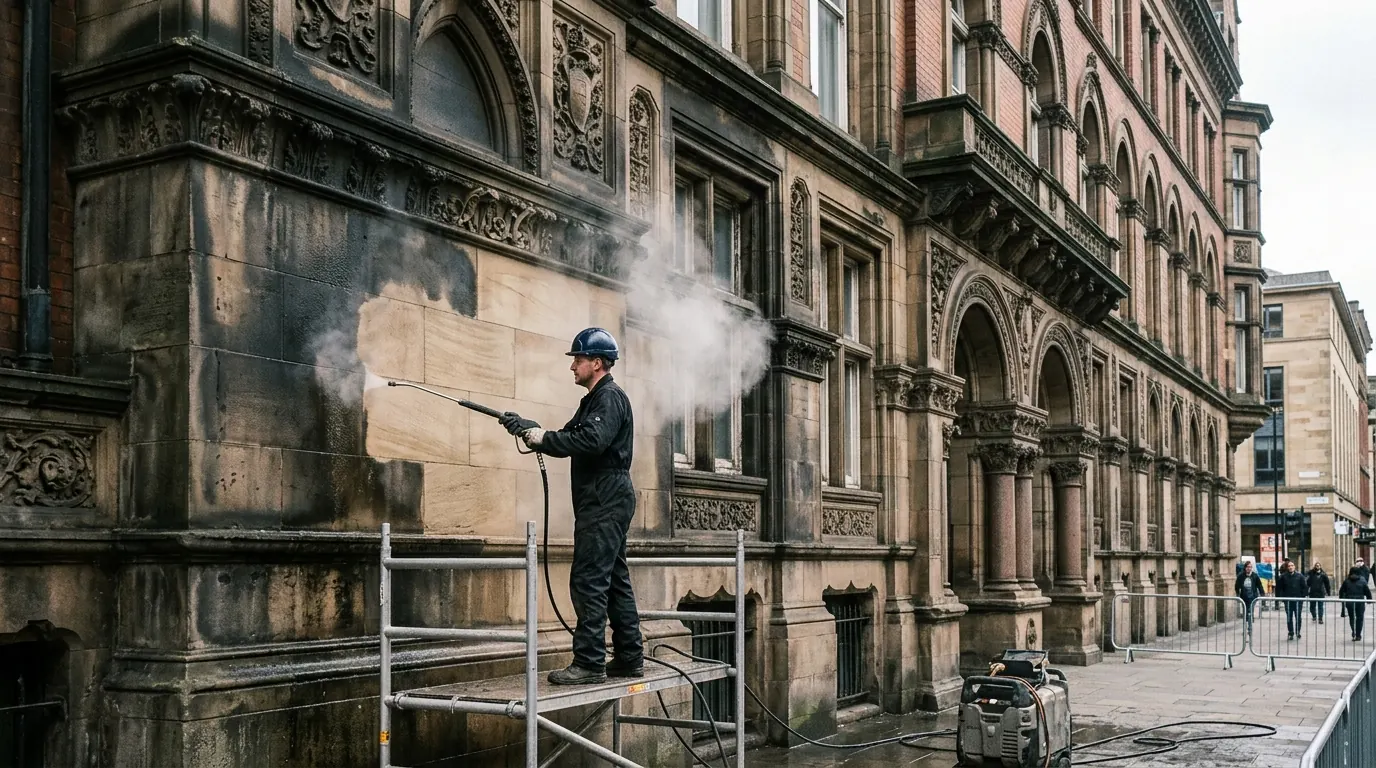
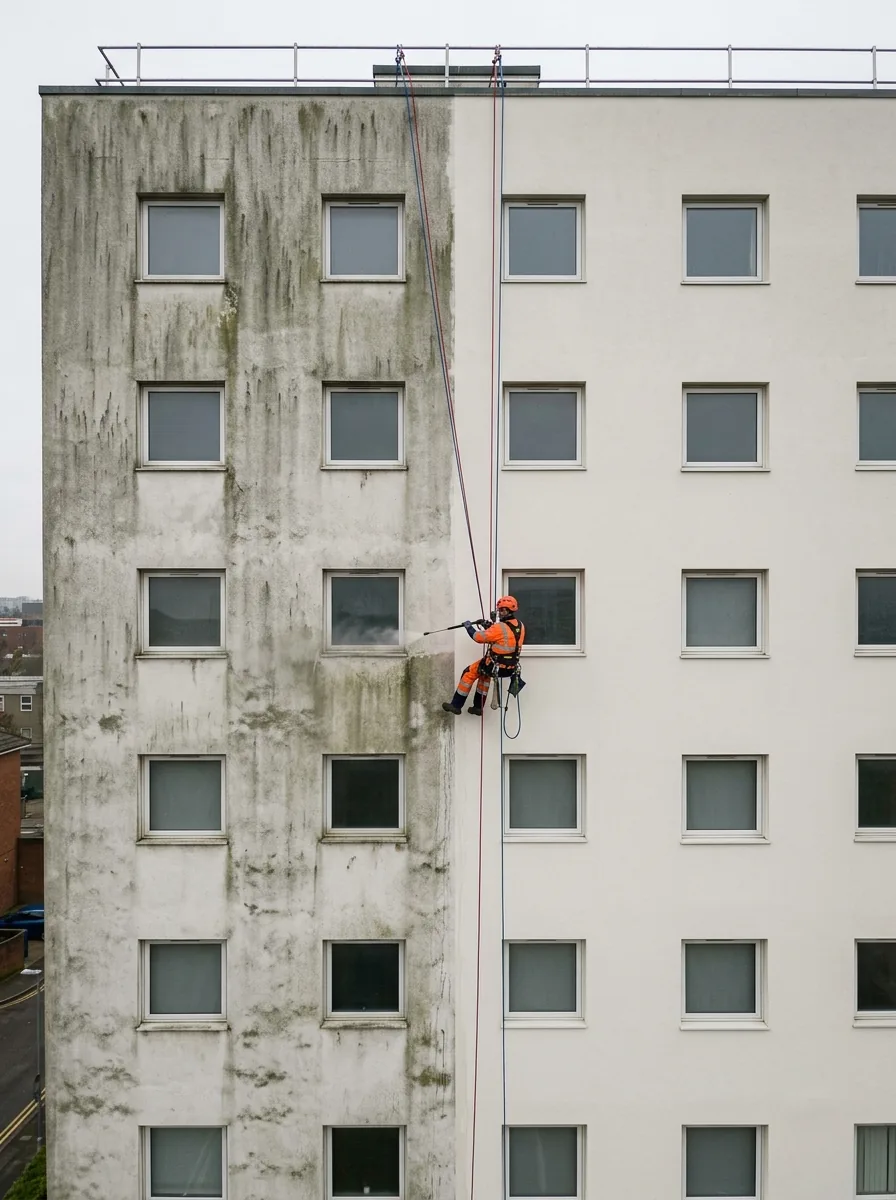
Carbon, pollution and biological growth come off stone, brick and terracotta with the gentlest method that works, not the harshest. You get a vetted masonry specialist who picks the method to the substrate, so the building looks decades younger and the stone is left intact.
every specialist on your jobIRATA rope accessPublic liability insuredRAMS & method statementsFixed written quoteReferences checked
The damage usually comes from the cleaning, not the dirt
Most masonry that looks ruined was cleaned too hard. Sandblasting and high pressure strip the fired skin off brick and the surface off stone, and the wall soils faster ever after. Our specialists start with the gentlest method that shifts the soiling, and step up only if the substrate allows it.
✓
Method suited to the substrate, not a one size blastSoft washing, DOFF or TORC depending on the stone, brick or terracotta.
✓
No sandblasting, no surface damageThe fired skin on brick and the face of the stone stay where they belong.
✓
Documentation pack on completionRAMS, insurance and a record for your files, every job.
How stone and brick cleaning is done properly
A specialist surveys the substrate and the soiling first, then uses the method that is safest for the masonry. Often it is a combination across one elevation.
every specialist on your job is IRATA certified and insured, and checked by us before your enquiry is passed on.
01
Survey the substrate
The specialist identifies the stone, brick or terracotta and the type of soiling, then tests a small area before committing the elevation.
Test patchSubstrate ID
02
DOFF superheated steam
Low pressure, high temperature steam lifts biological growth and soiling from sound masonry without chemicals or surface damage.
DOFFLow pressureSteam
03
TORC and JOS swirl
A gentle swirling vortex of fine inert media and water for carbon and paint on robust stone, calibrated to the surface.
TORCJOSCarbon
04
Soft washing and biocide
A dwell biocide and low pressure rinse for algae and organic staining, with a residual that slows regrowth.
Soft washBiocideAlgae
Stone and brick cleaning, common questions
How is stone and brick cleaned without damaging it?
By matching the method to the substrate. The gentlest effective option is used first, soft washing or DOFF superheated steam, stepping up to a calibrated TORC or JOS swirl only where the stone can take it. A test patch is always done before the full elevation.
Will cleaning damage the masonry?
It should not when done correctly. Damage comes from sandblasting and high pressure, which strip the fired skin off brick and the face off stone. Our specialists avoid those methods on historic and sound masonry, which is why the substrate survey and test patch matter.
Do you carry out the cleaning yourselves?
Yes. Our vetted masonry cleaning specialists cover your area, after checking their IRATA certification and insurance. You get a fixed price from the specialist who does the work.
How much does stone and brick cleaning cost?
It depends on the area, the substrate, the access and how heavy the soiling is. After a free survey you get one fixed price for a defined scope rather than an open day rate. See our facade cleaning cost guide for real ranges.
Can you clean listed or heritage stone?
Yes. Heritage and listed masonry is handled by our specialists, experienced in conservation methods and, where needed, the right consents. The approach is always the gentlest method that works, documented for the building file.
Answer six quick questions, add a photo of the building if you have one, and a vetted specialist who covers your area comes back with a quote, usually within one working day.
✓
A surveyor within 48 hoursThe person who would actually do the work.
✓
Fixed price with RAMS attachedItemised and agreed before anyone mobilises.
✓
Vetted, insured, IRATA certifiedWe check every contractor before we pass your job on.